Community
Taster Tour of St George’s Church in six episodes….week 6
Introduction
We hope you enjoy this mini taster tour in 6 instalments over the summer of 2024.
Everyone is welcome to visit St George’s – the church and its surroundings.
The building is open on weekdays: 9.00am – 1.00pm.
Do come and spend some time exploring. Experience the atmosphere, look at the many interesting items
and have some quiet time. There is usually someone available to listen or to answer questions.
Here is a link to information about Guided Tours
Week 6 – from Monday 2 September
You are surrounded by the vibrant colours of the windows.
There are three distinct styles of stained glass in St George’s church.
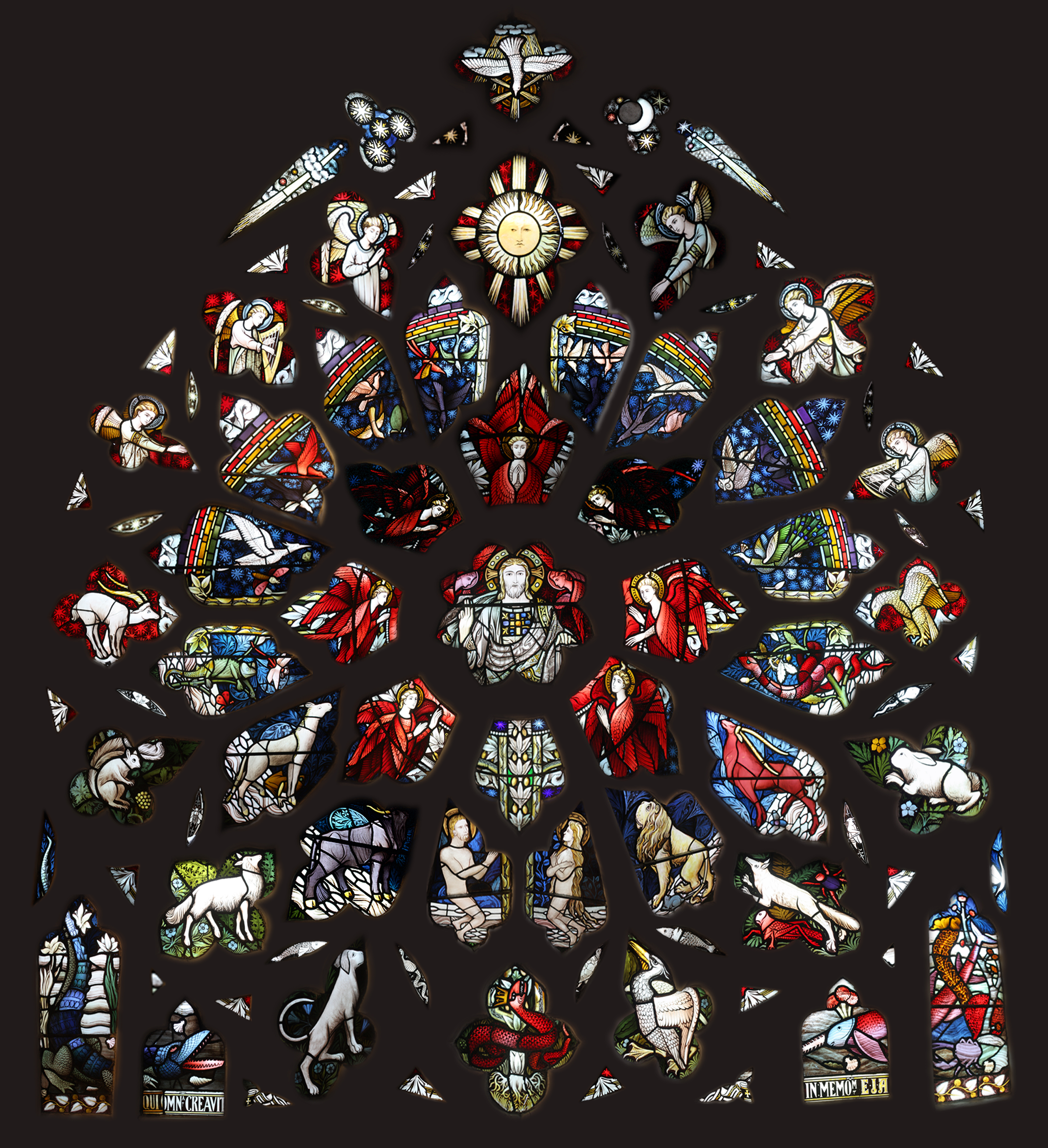
Along the south side of the church and at the back (west end) the glass is Victorian. These widows tell stories from the Bible. The Creation window, a rose window, at the west end (back) is particularly impressive. Confirmation and Holy Communion are depicted on the south side. The faces of the characters look particularly realistic and the texture of the material of their robes is almost palpable. The story of the events at end of Jesus’ life up to the coming of the Holy Spirit can be seen in the great south window.
In the Lady Chapel the windows, dating from the mid twentieth century, are subdued in colour and reflect the quiet atmosphere of this chapel. Each window depicts the involvement of Mary in the life of Christ. [see week 5]
The windows on the north side and in the sanctuary are post World War II, the Victorian windows having been blown out by a bomb which landed on what is now Beckenham Green They date from the 1970s. Designed by Thomas Freeth, a local artist, they have a distinctive style. Along the north wall are four windows representing the sequence of the church’s year [from the back]: the winter season of Advent Christmas and Epiphany; then the ministry of Jesus; followed by Easter; and finally Pentecost. Climbing up the great window in the north transept is the Tree of Life.

In the sanctuary the faces of those depicted show a Byzantine influence and the subject matter is theological: Christ is the second Adam; the prophet, the Great High Priest, the King, the Judge. Other characters appear on either side of the central figure.