Community
Eco Church – Churches Count on Nature: 4 – 12 June 2022
“Churches Count on Nature is a unique opportunity for those who love their churchyards and church spaces to take part in the largest ever nature count. With nature still in decline nationwide, this count will provide valuable data on what is happening to wildlife. In turn, that will help us to collectively work to take targeted action for nature’s recovery.” Andy Lester, A Rocha UK’s Head of Conservation.
On Saturday 4 June we carried out a survey of St George’s Churchyard, spending an hour concentrating on plant life.
Here are our findings:
Trees
ash, oak, yew, plane, lime, silver birch, sycamore
Bushes
rhododendron, privet, yellow privet, holly, buddleia, rose (various), rosemary, laurel, box, lilac, fatsia, hawthorn, dogwood
Grasses
rye grass, wall barley, marram grass, meadow grass, oat grass, pendulous sedge
Flowers
“wild”
ox eye daisy, cow parsley, daisy, meadow buttercup, plantain, teasel, primrose, cowslip, dandelion, germander speedwell, cat’s ear, bugle, sweet violet, herb-robert, stinging nettle, ivy, sorrel, golden hawksbeard, yellow hawksbeard, goose grass, wild arum, white clover, yarrow, milk thistle, ground ivy, salad burnett, sorrel, bramble, creeping cinquefoil, ragwort, chickweed, creeping speedwell, wild strawberry, feverfew, sweet woodruff, wild mustard, mouse-ear hawkweed, creeping wood sorrel, meadow buttercup, knapweed, ladies bedstraw, pennywort, hop trefoil.
“cultivated”
campanula, chameleon plant, honesty, red valerian, forget-me-not, hop, borage, bluebell, grape hyacinth, scilla, ice plant(stonecrop), geranium (various), elephants’ ears, periwinkle, sweet William, Michaelmas daisy, mini iris (blue), acanthus mollis, asteraceae, columbine, yellow fumitory, hebe, lambs ears
Mosses
Hair moss
Xanthoria parietina (yellow surface)
Fungus
honey fungus? – on yew tree
chicken of the woods – on plane tree
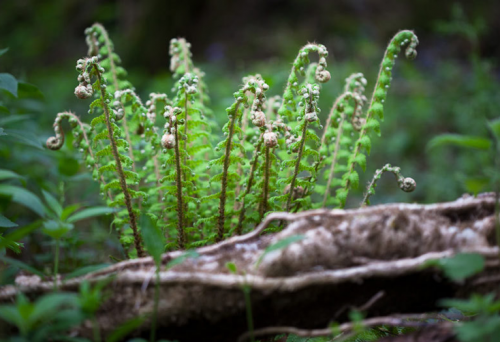
Ferns
bracken
hart’s tongue fern