Community
Lent course 2021 – After a year of Covid we lament
Introduction
In Advent we looked at a series of scenes based on the theme ‘The gift of a Child’. At Candlemas we gave thanks for the gift of the child Jesus as a light to the nations. Now we turn from the crib to the Cross.
During the past year many have suffered bereavement so now, during Lent, I offer a series of reflections considering loss. Whatever the age, the person remains a child to the parents.
Session 3 – Thursday 4 March – Wednesday 10 March
For these things I weep; my eyes flow with tears;
for a comforter is far from me, one to revive my courage. Lam 1. 16
The death of Absalom 2 Samuel 18. 1 – 19. 8
God had promised King David that his dynasty would be established
(2 Sam 7. 12 – 16, 29) but David’s family was very dysfunctional.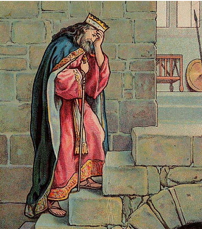
With several wives and concubines producing children for him, rivalries and disruptive behaviour abounds. David’s third son, Absalom, pursues Amnon, David’s eldest son, and takes revenge on him, killing him for his immoral behaviour with Tamar, Absalom’s sister. David mourns Amnon but is in two minds as to how to deal with Absalom, his favourite. Since David’s second son died young, Absalom is now David’s heir.
David decides to send Absalom into exile but he returns. He begins to plot (2 Sam 15. 1 – 6) to take the throne from David, who avoids taking action. Seemingly blind as to what is happening, David is weak with respect to dealing with his son. Finally there is a confrontation and David’s troops engage with those of Absalom. David has given strict instructions that Absalom is not to be harmed but David’s commander, Joab, kills Absalom.
Overcome with grief, David sobs: ‘O my son Absalom, my son, my son Absalom! Would that I had died instead of you, O Absalom, my son, my son!’ (2 Sam 18. 35). Perhaps David felt guilty that he was not able to protect his son and, instead of joy at victory over the would-be usurper, David weeps. No compassion has been shown to Absalom by David’s soldiers. Absalom is not their son and they do not feel a father’s love as David does. Whatever Absalom has done, he is still David’s son and therefore David finds that he can disregard all Absalom’s faults. His response to the death of this beloved child is to begin a liturgy of lament. He weeps, cries out, covers his face (2 Sam 19. 1 – 5). In Genesis the mourning ritual is described: a person ‘tore his garments, and put sackcloth on his loins and mourned his son for many days’ (Gen 37. 34). When Saul and Jonathan, David’s bosom friend, were killed in battle ‘David took hold of his clothes and tore them; and all the men who were with him did the same. They mourned and wept, and fasted until evening’ (2 Sam 1. 11 – 12).
At the news of Absalom’s death, David was so distraught that he could not share in the victory celebrations. Joab condemns him for neglecting his troops, accusing him that he would have been glad if the officers and soldiers had been killed and Absalom had lived. David’s mourning in public has to cease and he cannot take time to be with his family unit, to have a “wake” or to take comfort from a support group. He has to share in the victory celebrations and then return in triumph to Jerusalem.
Ritual, symbol, action and words are ways in which we begin to process grief. The tearing or rending of clothing is an opportunity for the release of feelings, perhaps of anger, and allows the mourner to give expression to suppressed pain. But for the past year most of these significant traditions have not been possible for us because of restrictions on funeral rites, travel and gathering together. Acts of compassion have been limited and generally at a distance. As David is required to continue with his responsibilities as king, so we have been unable, in our present context, to take time to go through the ceremonies of mourning.
Time is needed to come to terms with loss and moving too quickly into a positive frame of mind can have an adverse effect on the process of grieving. In the present context formalities have been minimised, ceremonies suspended and observances postponed. This has left many feeling disconnected with the event of death and, while remaining aware that there is unfinished business, we are unable to continue the process of grieving satisfactorily.
Church ministers, funeral directors and crematoria staff have designed creative ways through which the problems of not being able to attend occasions for mourning can be addressed. In some cases the purpose of the funeral or other rite becomes more apparent as the essential purpose of it is exposed. Extras are stripped away. In the privacy of a very small gathering, it may be easier to express sadness and to allow for tears rather than a stiff upper lip. Those who cannot physically attend can reflect quietly in the privacy of their own home, find space for remembrance, a display of grief and lamentation.
Blessed are those who mourn, for they will be comforted. Mat 5. 4
Prayer
We praise and adore you, God, our Father.
You are the maker of all things and you sustain your creation with love.
Heavenly Father, we ask you to comfort
all who have experienced the death of a loved one
but have not been able to say goodbye
and have been prevented from benefitting from the rituals
that can support the process of mourning
and of coming to terms with loss.
Help us to be sensitive and understanding,
realising that extra care and gentle words
are especially necessary for healing to begin. Amen.