Faith News
A message from St George parish church
All God’s Creatures
Introduction
Last year I presented a series on the trees of the Bible which ran all through the season of Trinity or Ordinary Time. This year we will engage with the members of the animal kingdom that appear in the Bible.
In this occasional series I may suggest that you to do some additional reading and investigation for yourself and I may not use the most obvious texts.
The list of animals in the account of Creation in Genesis chapter 1 is very familiar but there are other descriptions of creation in different books of the Bible and many more animals appear throughout the text. I will take a very broad approach including living creatures from smallest to largest; virus and gnat to elephant and whale; vertebrates and invertebrates; and various borderline cases. Texts are from the New Revised Standard Version, Anglicized Edition, with the Apocrypha and Deutero Canonical Books. The collection of animals included in this series is not exhaustive and the names for some creatures may differ in other translations.
Do take some time to look at our creation window: the great west rose window in St George’s.
Consider the variety and beauty of the creatures depicted there.
In the song of praise sung by the three young men, Hananiah, Mishael and Azariah, who were thrown into the burning fiery furnace we find:
The three with one voice praised and glorified and blessed God in the furnace:
“Blessed are you, O Lord, God of our ancestors,
and to be praised and highly exalted for ever.
…
Bless the Lord, you whales and all that swim in the waters;
sing praise to him and highly exalt him for ever.
Bless the Lord, all birds of the air;
sing praise to him and highly exalt him for ever.
Bless the Lord, all wild animals and cattle;
sing praise to him and highly exalt him for ever.
…
All who worship the Lord, bless the God of gods,
Sing praise to him and give thanks to him,
For his mercy endures for ever.
[Prayer of Azariah. 28, 29, 57 – 59, 68 (Apocrypha)]
Pests
Earlier we looked at the animals of the plagues of Egypt and one of these was lice [Ex 8. 16 – 18] which are also called gnats and another was the ‘deadly pestilence’ [Ex 9. 3] which affected the cattle and may have been one of various different diseases, including foot-and-mouth disease, or anthrax. It is sometimes called murrain. The problems caused by another pest, the locust, have been explained in the reflection on insects.
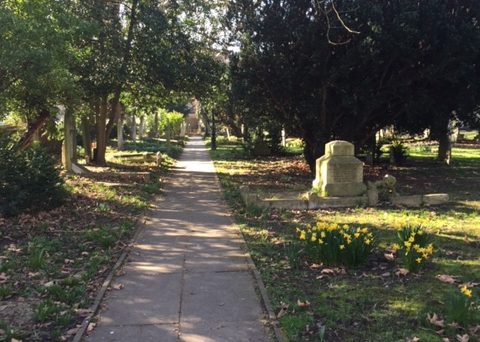
In the series on trees last summer, in the story of Jonah, we read that God gave Jonah a bush so that he could sit in the shade but then a worm appeared and attacked the bush and it withered [Jonah 4. 6 – 11].The action of the worm forces Jonah to consider his position and his attitude. The worm reminds humans that their bodies will eventually be eaten by worms so, like Jonah, people should bear in mind what will happen to their bodies and not be so proud: ‘humble yourself to the utmost for the punishment of the ungodly is fire and worms’ [Sirach 7. 17]. This attitude is encouraged on some gravestones. In our own church yard can be found the inscription: ‘Remember me as you pass by; As you are now so once was I; As I am now so you will be; Prepare for death and follow me’.
One of Job’s afflictions was that his flesh was ‘clothed with worms and dirt’ [Job 7. 5]. He describes his misfortune: ‘if I say to the Pit, “you are my father” and to the worm, “my mother”, or “my sister”, where then is my hope?’ [Job 17. 14]. He equates this situation to the punishment that both the wicked and the righteous suffer: ‘they lie down alike in the dust and the worms cover them’ [Job 21. 26]. Here the Pit indicates a grave but it is closely related to Sheol which is the underworld where the souls of people go when they die. Looking towards the end of the exile, the downfall of Babylon is spoken of by Isaiah. Again there is a warning concerning pride: ‘Your pomp is brought down to Sheol, and the sound of your harps; maggots are the bed beneath you, and worms are your covering’ [Isaiah 14. 11].
A different concept is described when Jesus explains the punishment ready for those whose hand, foot or eye causes them to ‘stumble … to be thrown into hell. Where worm never dies, and the fire is never quenched’ [Mark 9. 42 – 48]. Hell is a different and newer idea than that of Sheol. Jesus uses the word “Gehenna”, an actual geographical location near Jerusalem where child sacrifice had at one time been practised. All kinds of rubbish were tossed there. This then indicates a place of eternal torment. The idea of hell fire comes much later in history.
There is a very strange verse in Proverbs that mentions leeches [Prov 30. 15]. This verse is difficult to translate and even more puzzling when it comes to finding its significance. Many have been suggested but this is a case where it is perhaps unwise to try to invent a meaning for this picture language. Similarly the ‘snail that dissolves into slime’ [Ps 58. 8] describes the slime trail left by a snail and the remaining empty shell. At this time the life of the snail was not well understood so the picture here does not seem to make sense to us.
Other pests include scorpions and gnats. One of the ways that Rehoboam used to rule the people was to punish them harshly. This was against the advice of his elders. He listened to the young men who suggested that he rule with severity. He threatened the people: ‘my father beat you with whips, but I will beat you with scorpions [1Kings 12. 11]. His reign soon failed. Jesus gave his disciples the power to ‘tread on snakes and scorpions’ [Luke 10. 19] and not come to harm. In Revelation along with other torments is one ‘like the torture of a scorpion when it stings someone [Rev 9. 3, 5, 10].
The gnat is mentioned by Jesus when he speaks to the scribes and Pharisees who, in keeping the law, ‘strain out a gnat but swallow a camel!’ [Mt 23. 24].
Blessed are you, O Lord our God,
Maker of all living creatures:
fish in the sea, birds in the air,
and animals on the land.
May we always praise you
for all your beauty in creation.
Blessed are you, O Lord our God,
in all your creatures.
Amen